
1. What is a 3D Voxel Display? How Does It Work?
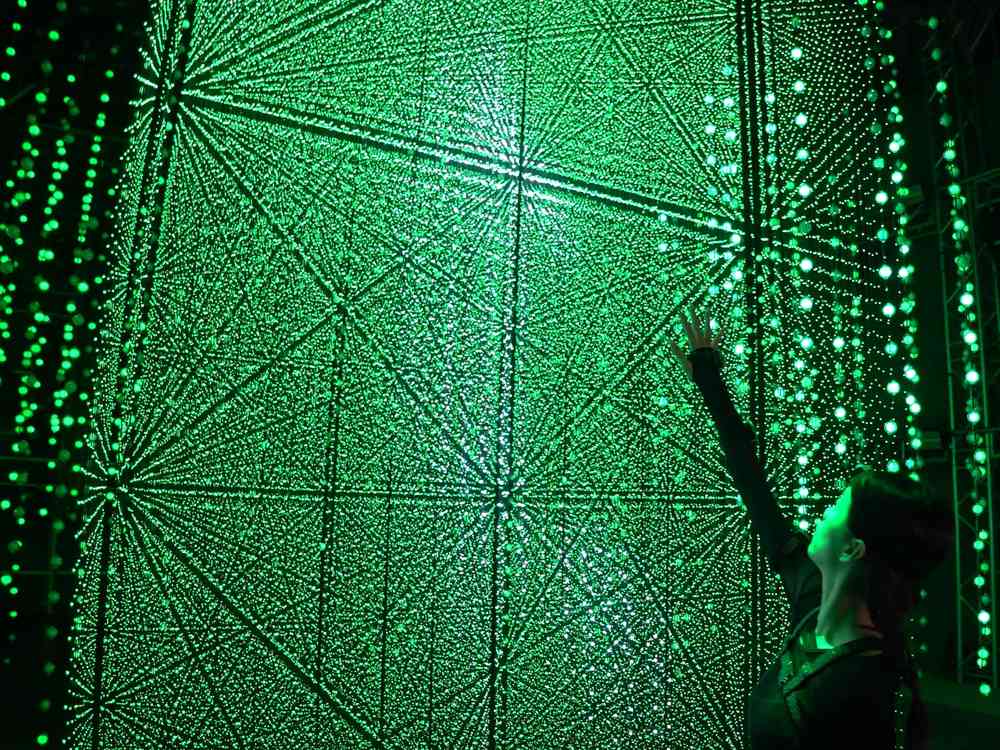
We selected three different brands of 3D voxel displays for comparison.
| Brand A | Brand B | Brand C | |
| Patented Chip | Yes | No | No |
| Number of Cores | 2 | 3 | 3 |
| Cable Size | 2 x 1 mm | ≥5 mm | ≥5 mm |
| Cable Color | Black | Black | White |
| Ensure Line Verticality | Yes | No | No |
| Maximum Length | 6 m | 6 m | 6 m |
| Transmittance | 50% | 10% | 10% |
| Maximum Pixels in 3m Module | 24576 | 6000 | 6000 |
| Maximum pixel combination | 3,840,000 | 348,000 | 348,000 |
| Minimum pixel width | 31.5 mm | 50 mm | 50 mm |
| LED Chips Size (H x L x W) | 3 x 2 x 1 mm | 13.4 x 5.8 x 5 mm | 13.4 x 5.8 x 5 mm |
| LED Chips Power | 0.06 w | 0.1 w | 0.1 w |
| LED Chips Material | Transparent | Milky | Milky |
| Viewing angle of LED chips | 360° | 180° | 180° |
| Software Support | Madrix/Touch Designer/Unity/Resolume | Madrix | Madrix |
| Control Protocol | DVI / HDMI | Artnet | Artnet |
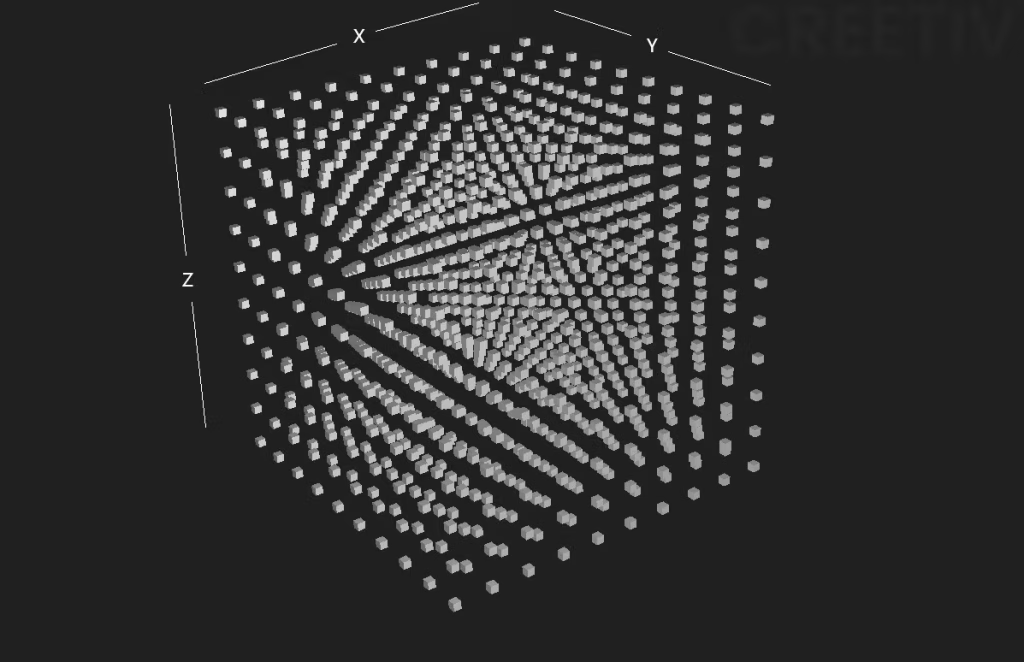
In traditional video displays, pixels are arranged in rows and columns (X-axis and Y-axis). This method is suitable for 2D displays. To achieve a cube-shaped 3D display, a Z-axis needs to be added. When the pixels on the X-axis and Y-axis are 10 x 10, increasing the number of pixels on the Z-axis to 10 will give us a cube, which is a 3D Voxel display.
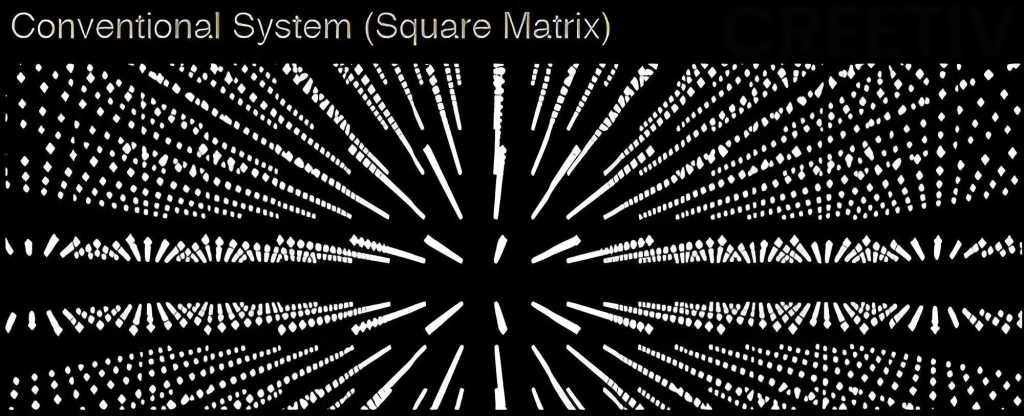
However, this presents a problem: the pixel arrangement of traditional square matrix will leave blank areas between 3D pixels and cause pixel occlusion.
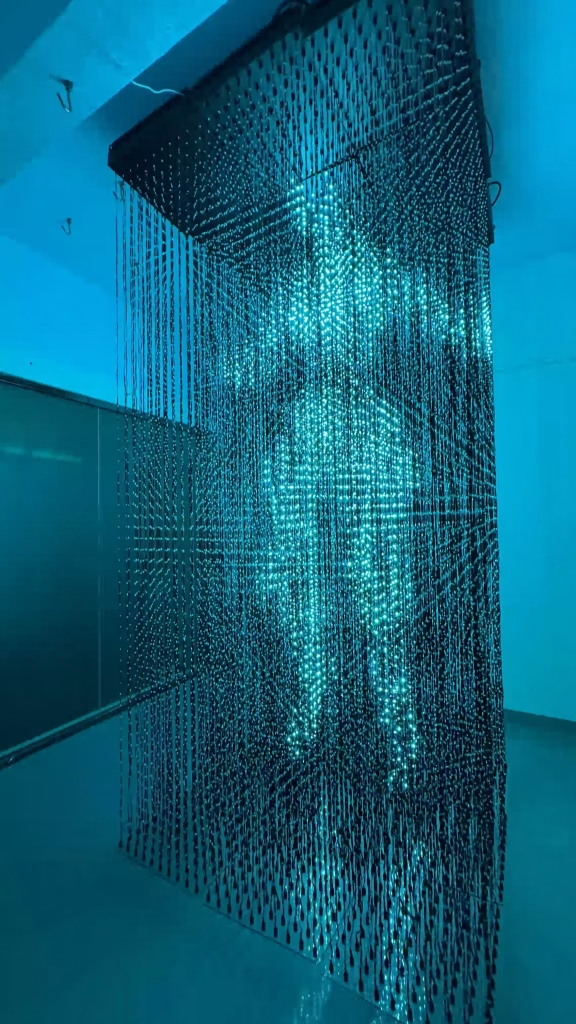
Brand B
The current mainstream approach to solving this problem is to utilize an organic matrix distribution system. This system uses algorithms to redistribute pixels to fill blank areas while simultaneously improving transparency. By analyzing the matrix arrangement, we can initially determine whether a product meets basic standards.
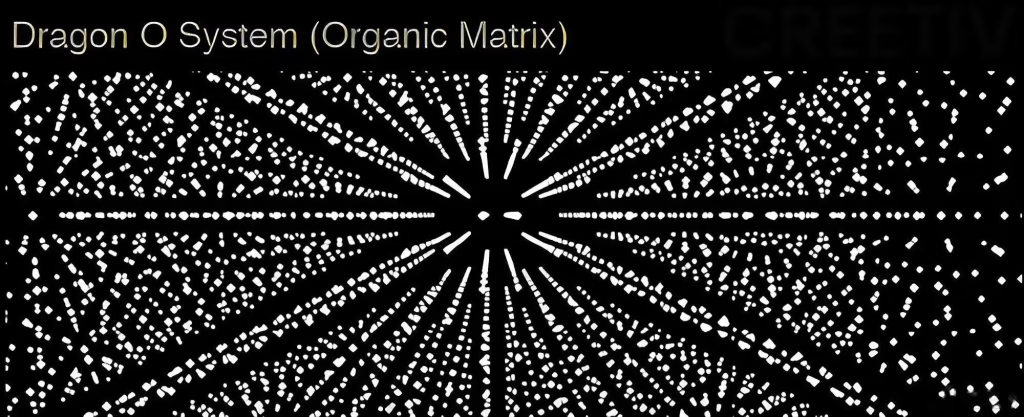
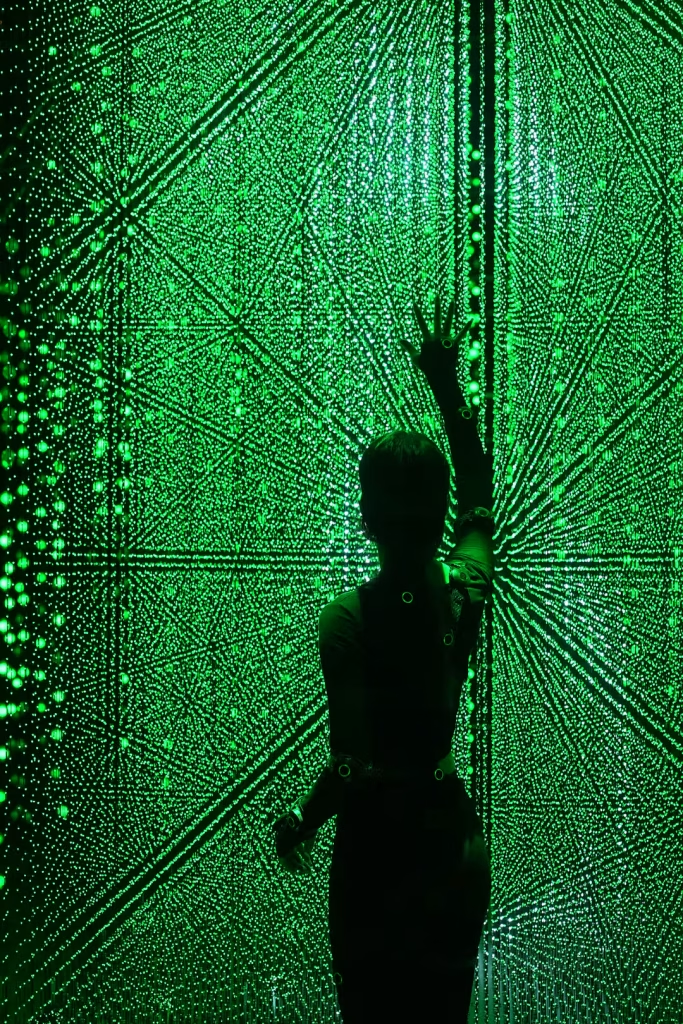
Brand A
2. Three key points of 3D Voxel display
2.1 LED Chips size
The size of LED chips is a decisive factor in the detail of 3D videos. If the size is too large, it will block the LED chips behind, causing strange distortion and loss of detail in the video. Currently, the smallest LED chips used in 3D Voxel displays are H3 x L2 x W1 mm.
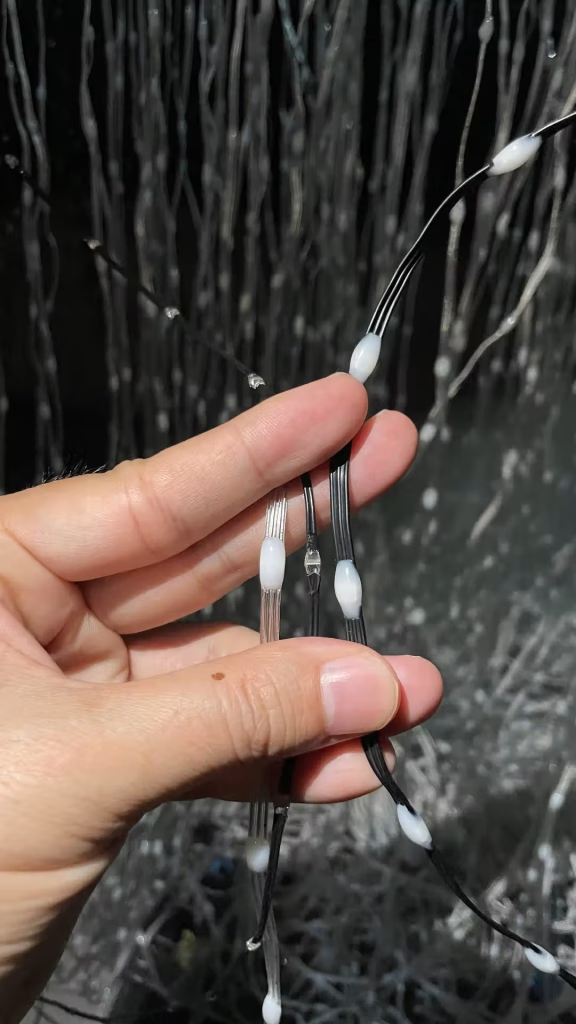
H3 x L2 x W1 mm LED In the middle – Brand A
2.2 Lighting viewing angle
The viewing angle of LED chips determines whether viewers at every angle can see consistent video content. Currently, the market offers two light-emitting angles: 180° and 360°. The 180° design achieves uniform light emission through single-sided illumination and resin encapsulation, but the back is noticeably less bright than the front, causing detail loss for viewers at different angles. If the resin encapsulating the LED chips is white, it’s a 180° single-sided light-emitting design. The 360° design uses upward light emission and transparent acrylic to diffuse the light, ensuring detail from any viewing angle. If the LED chips are transparent, it’s a 360° light-emitting design.
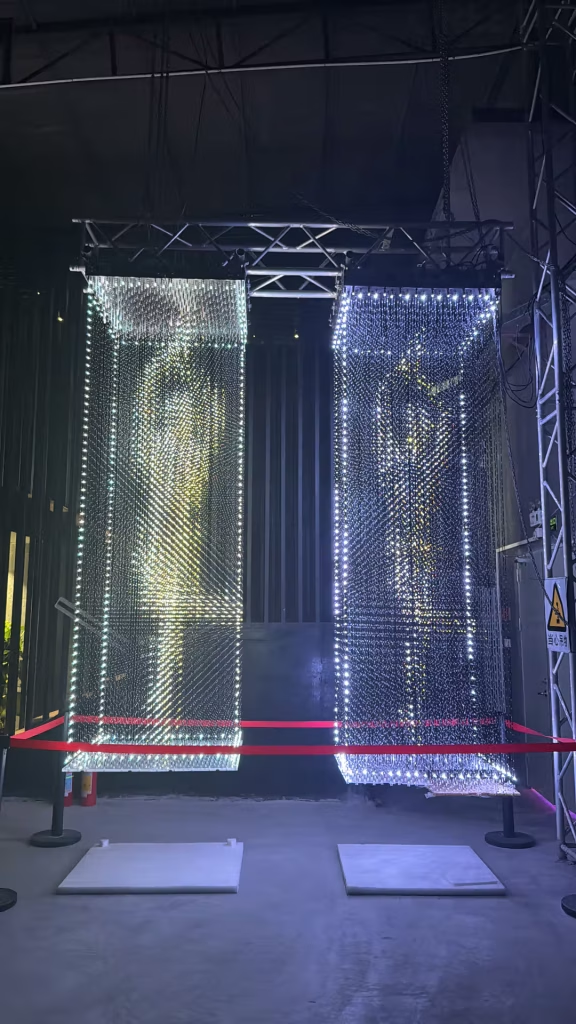
Left 360° (Brand A), Right 180° (Brand B), With the same signal source input, we can see that a lot of details have been lost on the right.
2.3 Cable size and verticality
Cable size determines transparency; smaller cables ensure better transparency. Choosing small cables is crucial if we want viewers to see objects behind the 3D Voxel display. The illustration shows a 3D Voxel display measuring L2 x W2 x H6 meters with 1600 cables, yet the lighting fixtures behind it are still clearly visible. Currently, the smallest cable used in 3D displays is 1mm x 2 pins.
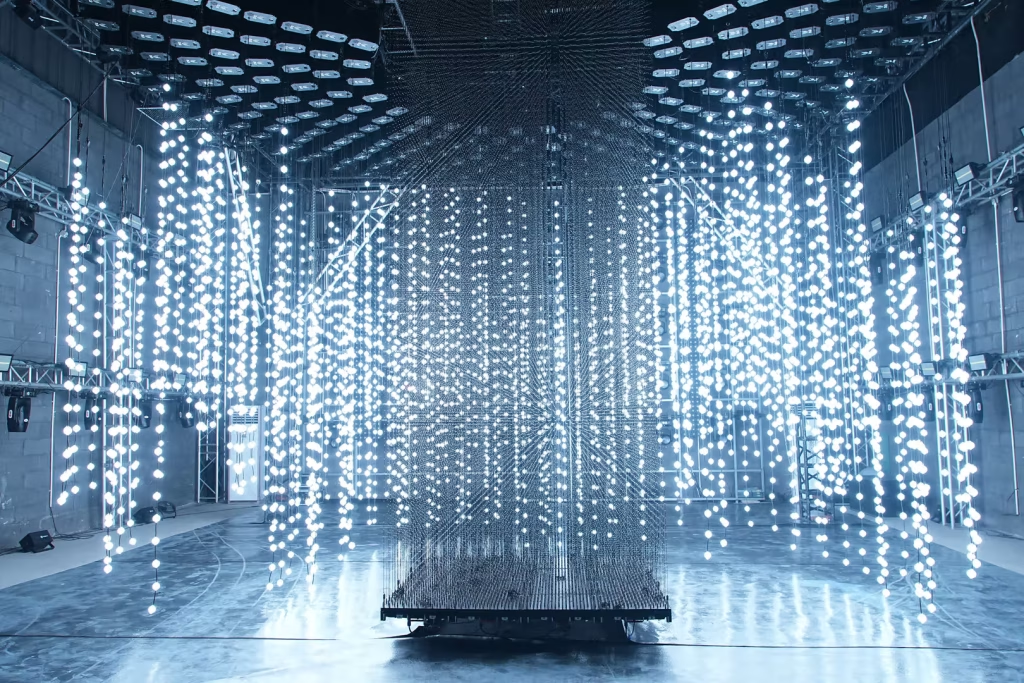
50% transparency – Brand A
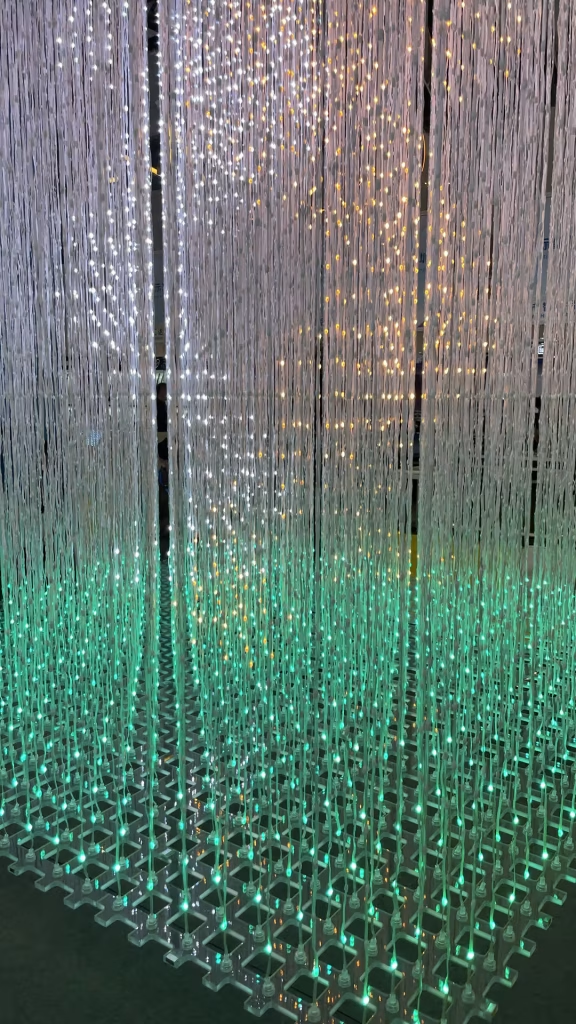
10% transparency – Brand C
Cable perpendicularity determines whether the image will be distorted; compliant products must ensure perfectly perpendicular cables. Some products may use stiffer cables to reduce costs, which can cause video distortion that cannot be corrected.
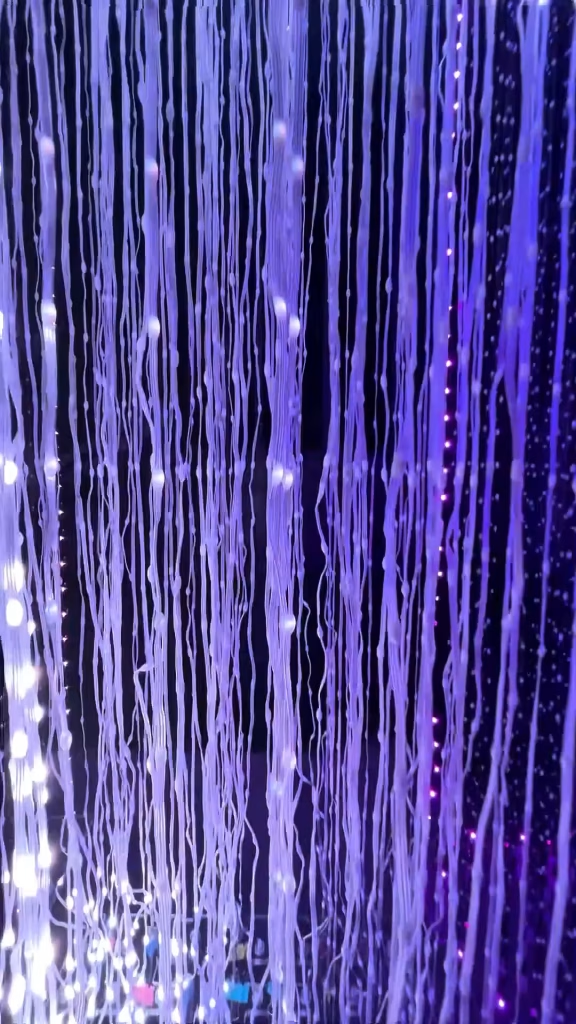
Brand C
3. Which 3D Voxel Display Do You Actually Need?
3.1 Project Budget Considerations
If you have a sufficient budget, we recommend choosing brand A. If you have a limited budget, choosing brands B and C. B and C difference between them is the color and size of the wires.
3.2 Optimal Viewing Distance
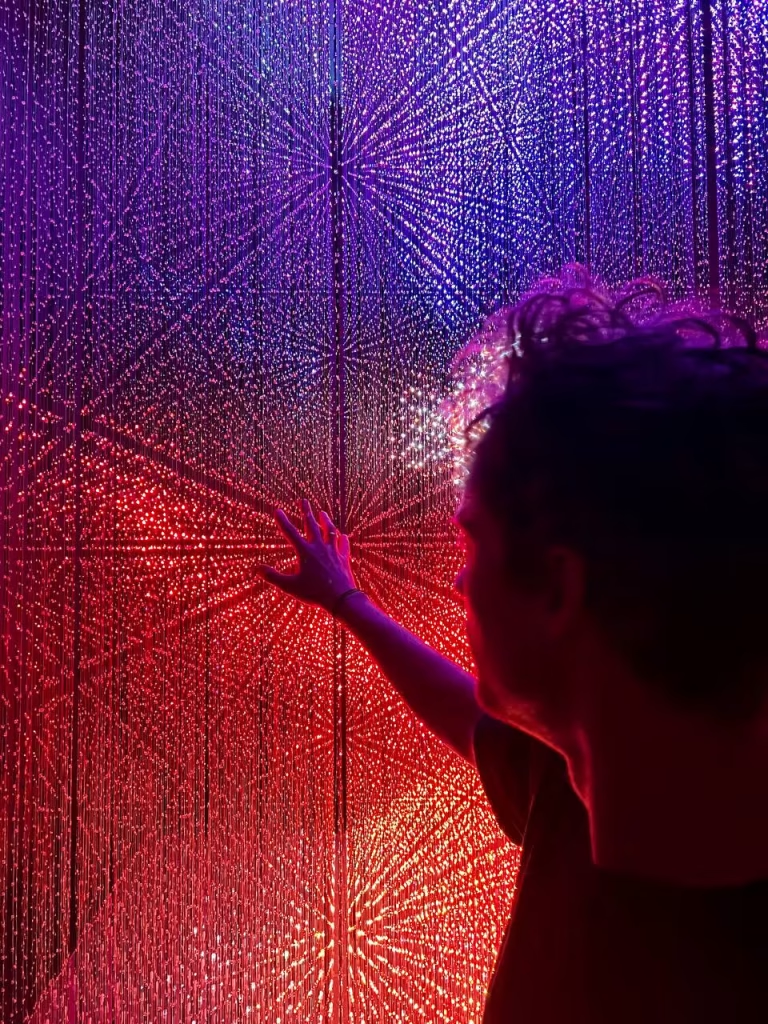
If the audience is only viewing from a distance, such as 10 meters away, then brands B and C are both suitable. However, if you want the audience to view the content up close and even touch it, then brand A is the appropriate choice.
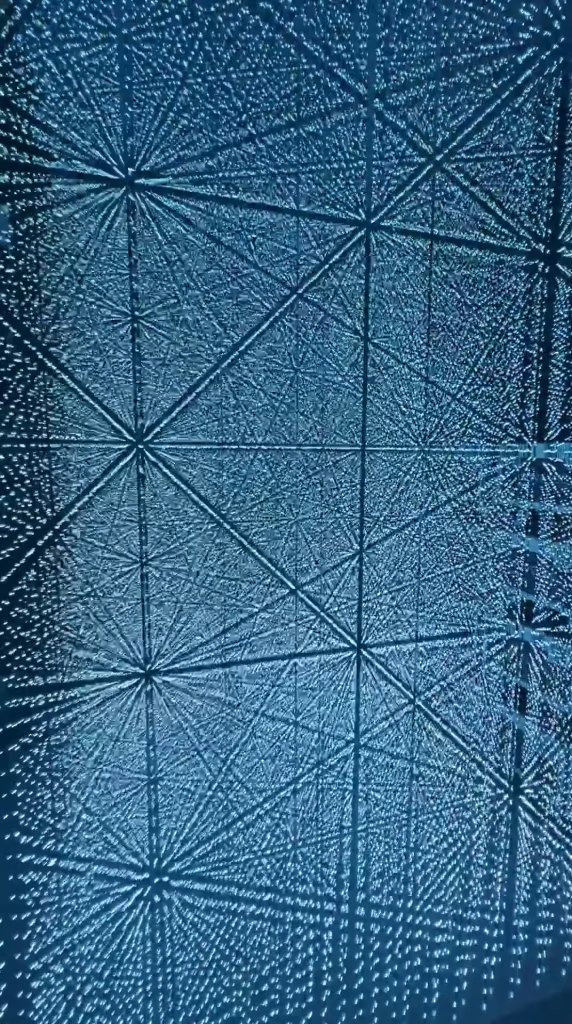
Close up – Brand A
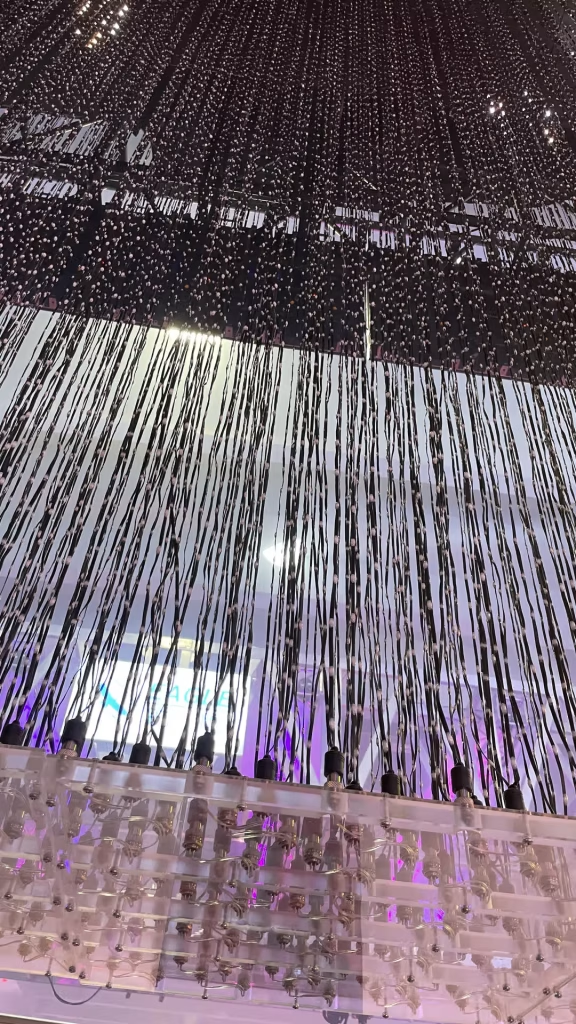
Close up – Brand B
3.3 Dynamic details
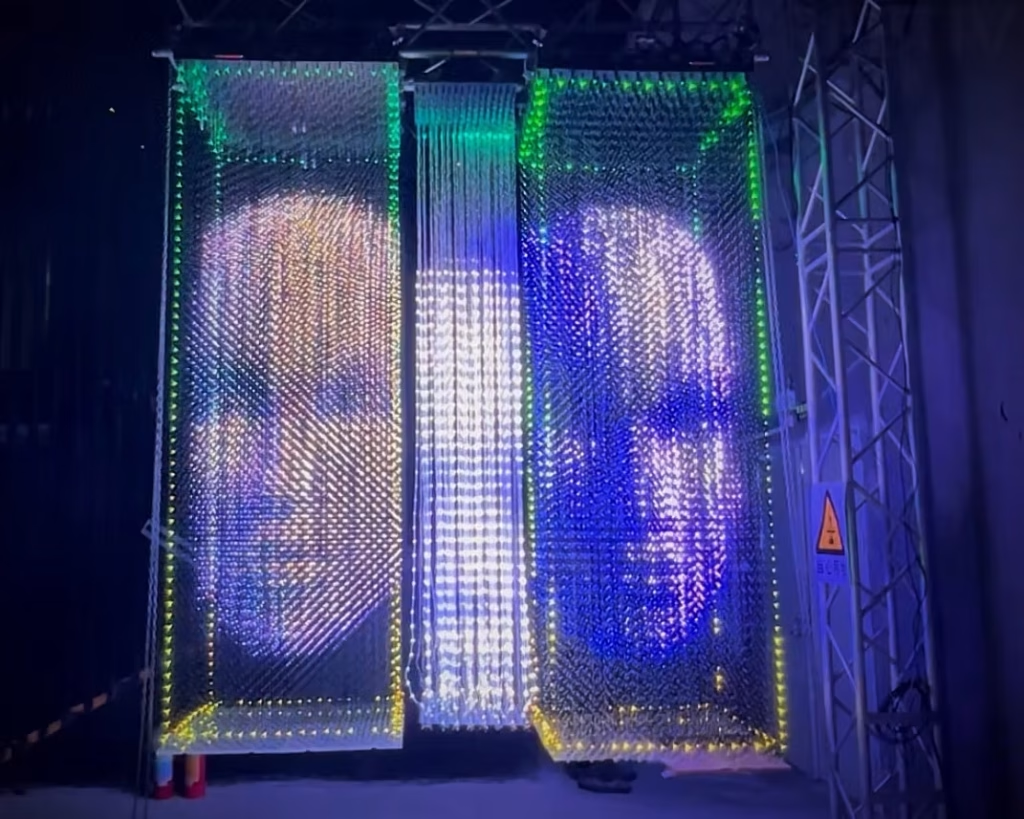
If the 3D video has geometric or particle effects, B and C are barely passable. For detailed videos like those depicting faces, A clearly shows the details, while B and C lose a significant amount of detail. Furthermore, due to the limited 180° illumination, you’ll see a strange blue tint in the example, not a clean
3.4 Content support
Manufacturers typically only sell products and do not provide content creation services. If you want to customize a custom 3D video, you will need to find a supplier that provides this service, or contact a third-party video production team yourself.
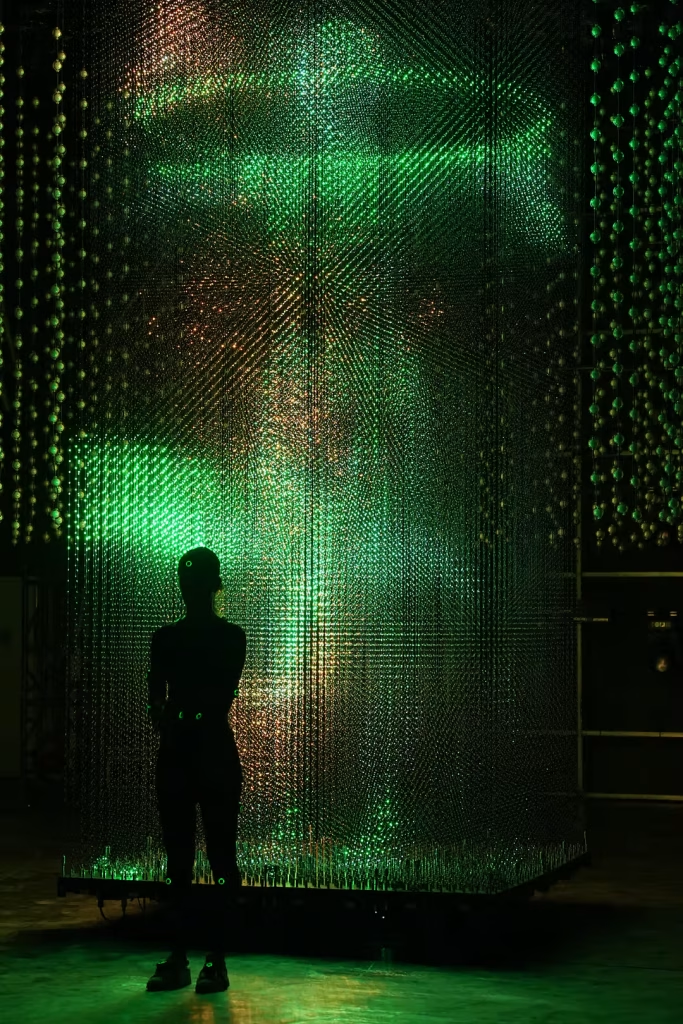
Motion capture interaction – Brand A
3.5 Technical Support
3D Voxel displays are complex products, and the following factors should be considered when selecting a supplier: Extensive software and hardware experience to ensure successful project implementation.
- A lot of successful projects worldwide.
- Fast communication and service capabilities.
- A global on-site or remote technical support team.
- Borderless communication in multiple languages.
4. Best 3D voxel display supplier in 2026
The Dragon 3D Display is a 3D voxel display from Creetiv Tech. It boasts world-leading performance specifications and has been successfully applied in many projects.